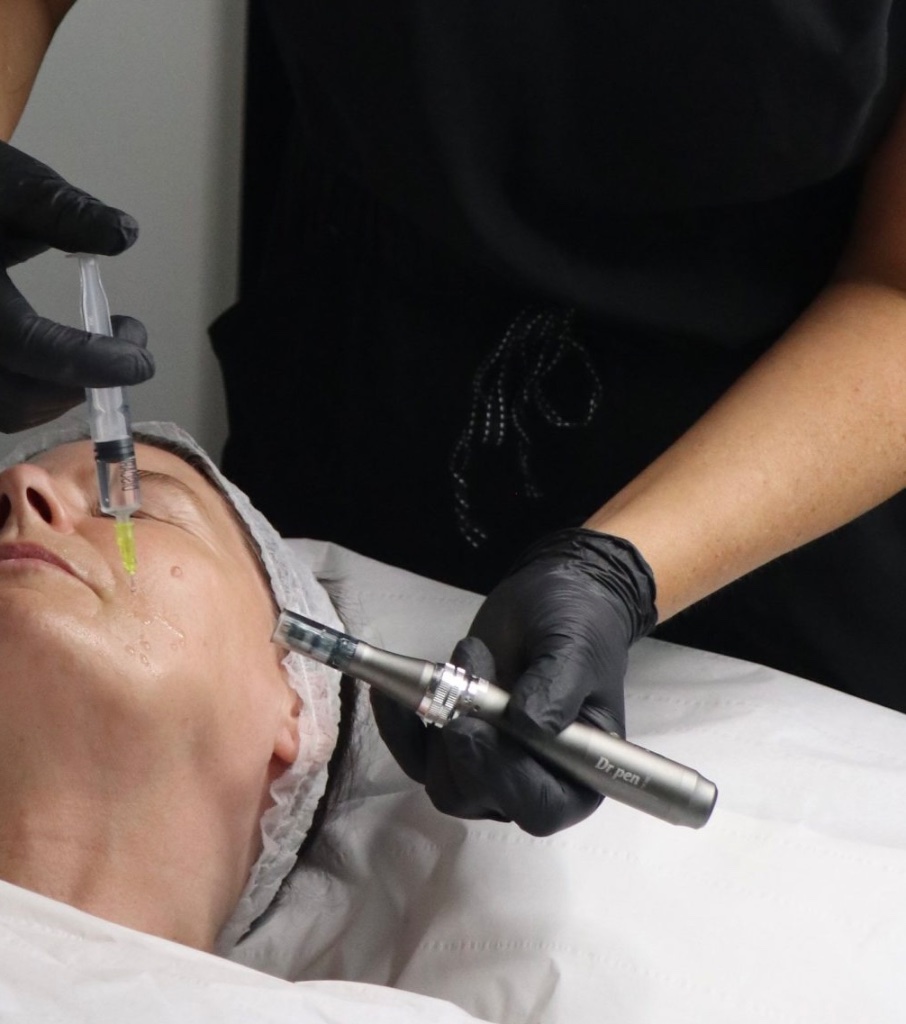
Exosome Therapy with Microneedling
Microneedling tells the skin to repair. Exosomes help tell it how.
Overview
Exosomes represent one of the newest and most exciting frontiers in regenerative aesthetic medicine. They are microscopic biological messengers that carry signals between cells, capable of influencing how the skin behaves at a cellular level. At Luminè, exosome therapy is delivered in combination with medical grade microneedling, a pairing designed to compound the regenerative response and improve skin quality at depth. Every treatment is performed by a doctor.
The science of exosomes is reshaping how regenerative medicine is understood. Exosomes are tiny extracellular vesicles, typically between 30 and 150 nanometres in size, released naturally by cells throughout the body. They serve as the body's own messaging system, carrying biologically active cargo, proteins, lipids, growth factors, and small genetic molecules such as messenger RNA and microRNA, from one cell to another. In doing so, they influence how surrounding cells behave, how they grow, repair, communicate, and respond to stress.
In aesthetic medicine, exosomes are isolated, purified and prepared for use in carefully selected products derived from regenerative sources. When applied to the skin in combination with microneedling, the signals they carry encourage fibroblasts and other skin cells to behave more like the younger, more biologically active cells they once were. The result, over a course of treatments, is a meaningful improvement in skin quality, tone, hydration, fine lines and overall vitality.
At Luminè, exosomes are applied topically to the skin immediately following medical grade microneedling. The microscopic channels created by the needling allow the exosomes to penetrate efficiently into the dermis, where their signalling effect is most useful. The two treatments are not simply compatible, they are deliberately designed to amplify each other.
At a Glance
How It Works
The Science Behind the Treatment
01
The role of microneedling
Microneedling creates a controlled pattern of microscopic channels, activating the skin's natural wound-healing cascade. An inflammatory phase where immune cells prepare the tissue, a proliferative phase where fibroblasts produce new collagen, elastin and extracellular matrix, and a remodelling phase where that new collagen matures. Improved texture, tone, pore refinement and fine line softening follow as a result of this biological sequence.
02
The role of exosomes
Applied immediately after microneedling, exosomes enter through the freshly created microchannels and reach the dermal layer. The signalling molecules they carry, including messenger RNA, microRNA and growth factors, influence fibroblasts to produce more collagen and elastin, support microcirculation, modulate inflammation, and encourage cells under stress to function more effectively. Microneedling tells the skin to repair; exosomes help tell it how to repair more efficiently.
03
How fine lines respond
Exosome therapy does not fill fine lines. As collagen and elastin synthesis increases and the dermis thickens, the dermal scaffold beneath fine lines becomes biologically healthier and more resilient. Static fine lines associated with dermal thinning, dehydration and oxidative stress soften gradually from beneath, not because anything has been placed under them, but because the skin itself is renewed.
04
The biological lift
As collagen and elastin content rise and the dermis becomes thicker and more elastic, the skin holds itself differently, firmer, more resilient, with better tone. This is a quality led lift rather than a structural one, and it pairs particularly well with structural treatments such as collagen-stimulating injectables when a more comprehensive plan is appropriate.
Benefits
What to Expect
A synergistic regenerative response, more substantial than microneedling or exosomes alone
Improved skin texture, tone and luminosity
A smoother, more even skin surface
Softening of fine lines through dermal renewal
Reduction in dullness, blotchiness and post-inflammatory pigmentation
Improved skin hydration and elasticity
Useful as an adjunct in post-acne textural concerns and certain types of scarring
Often supports a calmer, faster recovery than microneedling alone
Treatment Areas
What We Can Treat
Face
The primary indication, skin quality, fine lines, tone, texture and a natural improvement in radiance.
Neck
Thinning, crepey skin responds well to the combined regenerative and collagen induction effect.
Décolletage
An often-overlooked area where dermal renewal produces meaningful textural and tonal improvement.
Post-acne texture
Useful as part of a broader plan for superficial acne scarring and post-inflammatory textural change.
Mild scarring
In selected cases, the combined protocol supports improvement in scar texture and colour.
Scalp
Similar protocols can be applied in selected hair restoration support contexts.
Why Luminè
Exosome therapy is a newer category in aesthetic medicine, and product quality, source and provenance vary significantly across the market. At Luminè, we use regulated, sourced product and a doctor led protocol from preparation through to application. We will be honest with you about what exosome therapy can and cannot do, and we will only recommend it where we believe it is genuinely the right treatment for your skin.
Questions
Frequently Asked
What are exosomes?
Exosomes are very small extracellular vesicles, naturally released by cells, that carry biological signals between them. In aesthetic medicine, they are sourced from regenerative cells, purified, and used to influence how skin cells behave at a cellular level.
Why is exosome therapy combined with microneedling?
Microneedling creates microscopic channels in the skin that allow the exosomes to penetrate effectively into the dermis, where their signalling effect is most useful. The two treatments are also biologically complementary, microneedling triggers a regenerative response, and exosomes help guide it.
Are exosomes a stem cell treatment?
No. Exosomes are not stem cells. They are messengers released by cells, and the products used in aesthetic medicine contain only the purified vesicles, not living cells. The stem cell therapy framing is misleading and we deliberately avoid it.
Are exosomes safe?
Exosome therapy delivered topically alongside microneedling, in the hands of qualified clinicians using regulated, sourced product, has a favourable safety profile. We use sterile technique and discuss the considerations fully at consultation. It is not suitable for everyone, and a medical assessment confirms suitability before any treatment.
Will it hurt?
Topical numbing makes the microneedling component comfortable. The exosome application itself is painless.
How many sessions will I need?
Typically three sessions, spaced four to six weeks apart, followed by periodic maintenance every six to twelve months.
When will I see results?
A subtle glow within days; more meaningful improvement in texture and tone over four to six weeks, with continued change building over the course of treatment.
How is this different from PRP microneedling?
Both are regenerative microneedling treatments, but PRP uses growth factors derived from your own blood, while exosome therapy uses a purified, ready-made signalling product. PRP is personalised to your own biology; exosomes provide a consistent, standardised regenerative signal. Both have merit, and your consultation will help determine which is more appropriate for you.
The Most Current Generation of Regenerative Skin Therapy
Book a consultation at Luminè. We will assess your skin, discuss honestly whether exosome microneedling is the right choice for you, and design a plan around your goals.